Welcome- Numbers By Milissa InnerSoul Numerology & Coaching
  • Welcome: Numbers By Milissa
    • Numbers By Milissa! >
      • What is Numerology?
  • InnerSoul Coaching
  • About Milissa
  • Services
  • Blog
  • Contact
    • Feedback
    • EVENTS
    • Links
  • What We Are
  • Aromatherapy
  • Yoga Nidra
  • Energy Healing
    • What are Chakras?
  • Past Life Exploration
    • What is Hypnosis?
  • Intuitive Writing

Masculine + Feminine =                                       Balanced Transformative Energy!

4/30/2022

0 Comments

 
Picture


The union of the feminine and masculine energies within the individual is the basis of creation.    
                ~Shakti Gawain
                                                                                    
​

      Too often in society, gender is confused with and narrowly defined by masculine or feminine energies. This narrow definition is limiting and creates stagnation. Humans contain both energies, regardless of sex and gender roles. A healthy balance of masculine and feminine energies makes for more fully functioning, healthy human beings. When energetically in harmony, people are more likely to experience well-being, contributing to their relationships and all aspects of their life in a deeper, transformative way.
      Masculine energy is often perceived as strong, assertive, powerful, and leadership-oriented. On the contrary, feminine energy is perceived as soft, nurturing, empathic, and “following”. One without the other, though, creates imbalance. A person exhibiting leadership and aggressive negotiating skills without receptive listening skills and empathy, presents as a harsh leader. A person exhibiting a soft, nurturing nature with lots of empathy but without the strength to communicate their needs and set clear boundaries is similarly imbalanced, presenting as a doormat.
      Unfortunately, society teaches lessons that create toxic energy states. Children from a young age learn lessons that stereotype masculine/feminine energy like “Girls are helpful and nice” and “Boys don’t cry”. This encourages each sex to take on imbalanced gender-role thinking and behavior to their detriment. It shows each energy as separate versus equal in value and balancing to each other. Resistance comes up around the assumption that feminine energy is being pushed on men or that women are being pushed to be more masculine in pursuing goals instead of more “traditional” roles. The reality is that both sexes are inhabited by both energies with the goal of balance, not substitution or takeover. An aggressive leader that exhibits empathy or a nurturer that sets strong boundaries are healthy and balanced, not more female or male. Understanding this is transformative!
      When viewing masculine/feminine energy from a yogic/Ayurvedic (shiva/shakti) and Chinese medicine (yin/yang) viewpoint, they’re seen as complementary energies that need each other to coexist. Opposites are appreciated in balanced relationship to each other - light/dark, hot/cold, aggressive/receptive, giving/receiving. And, so it goes with masculine/feminine energies. One without the other is at best imbalanced, at worst, toxic.
      Balancing masculine and feminine energy can be complicated due to societal conditioning but we can initiate change by transitioning to an energetic perspective and working with the breath to balance the body-mind. Nadi Shodana, or Alternate Nostril Breathing, is a yogic breathing practice, or pranayama, used to help balance the Ida and Pingala nadis (meridians) that run along the spine. The Ida nadi represents feminine energy and the Pingala nadi represents masculine energy. They represent the duality of existence. Pingala is associated with the right nostril and the left hemisphere of the brain. Ida is associated with the left nostril and the right hemisphere of the brain. Each of these nadis start at the base of the spine and crisscross the chakras as they travel up the spine to the third eye, ending at the right and left nostrils. This is the perfect practice for balancing our energy when we are frazzled with too much masculine energy or stagnant because of too much feminine energy. This practice 1) restores balance between the right/left hemispheres of the brain, 2) rejuvenates the nervous system, 3) manages stress responses, 4) clears the energy channels in the body-mind, and 5) promotes a feeling of well-being, clearing/focusing the mind/emotions.
Here are instructions for Nadi Shodana practice:
1.Sit comfortably, feet flat on the floor.
2.Imagine a thread pulling you upward from the top of your head, lengthening the spine. Let the shoulders drop downward, releasing tension. Close your eyes and draw your attention inward.
3.Place your left hand on your thigh, palm facing upward.
4.Place your right hand in front of your face palm inward, index and middle finger extended, resting on your forehead.
5.Close your right nostril pressing in and upward with the thumb of the right hand. Breathe in through the left nostril.
6.Release the right nostril, closing the left nostril with the ring and pinky fingers the same way. Exhale through the right nostril.
7.Inhale through the right nostril.
8.Close the right nostril with the thumb again. Release the left nostril and exhale.
9.This completes one cycle. Repeat this cycle five or six times.
 
      Nadi Shodana is an excellent practice that is only contraindicated if you have a cold affecting breathing. In that case, you could psychically do the practice, visualizing the process of breathing through each nostril. It takes a little imagination but is a useful alternative. With practice over time, your calm/focus baseline will transform as your feminine/masculine energies shift and balance!
Published Creations Magazine Oct/Nov 2022

0 Comments

What Makes You Happy?

7/17/2021

0 Comments

 
Picture


“Don't cry because it's over, smile because it  happened.”   ~ Dr. Seuss

                Fall has arrived.  I’m happy for crisp air and the backdrop of colorful, falling leaves. I imagine that others are happy when seasons change too but it does makes me wonder- What makes people happy? The well-known phrase “Life, Liberty and the pursuit of Happiness" begs the question – is happiness pursued?
     “If I get that job or new relationship, then I’ll be happy” are common thoughts. These desires seek happiness out there somewhere. But, all of these external wants don’t make anyone happier - long term. The most current research says that we create happiness. It’s not found. But, is seeking happiness a waste of time? Not exactly. Money or a relationship will bring happiness - temporarily. The happiness high wears off and the search for the next happiness fix begins. Researchers discovered that happiness has a shelf-life.
      So, what is the key to happiness? Research says that new found happiness levels spike then return to an inherited set-point. Some of us have inherited a happier set-point than others. This dictates happiness levels over the course of our lifetime, accounting for about 50% of our total happiness. Only about 10% of happiness is influenced by our environment. Situations and life circumstances have a negligible effect on happiness. The good news is that 40% is left within our control, informed by how we think and what we do daily. We make ourselves more or less happy through our outlook and choices. WE choose happiness.
      What are some of the characteristics of happy people? How do they think, behave, and act? Happy people experience distress and unhappiness like everyone else but they bounce back better due to their coping skills and happiness habits.
      According to happiness studies, happier people:
1.         Express gratitude
2.        Spend time with friends and family
3.        Are optimistic about the future
4.        Offer help to others
5.        Set and commit to goals/ambitions
6.        Are resilient in the face of crises and challenges, showing good coping skills and positivity
7.        Exercise on a regular basis; weekly, at most daily
8.        Live in the present moment and enjoy simple pleasures
      Martin Seligman, a professor at the University of Pennsylvania, did a study where he taught a group of severely depressed people a happiness enhancing strategy. They were instructed to do an exercise online to remember and write down three good things that happened to them daily. For example, if a friend called to check in or a neighbor dropped off a meal, they were instructed to write it down. He discovered within 30 days, the participant’s depression lifted from “severely depressed” to “mildly/moderately depressed”, with 94% experiencing relief. This research has been repeated with the similar results. This is one example of research that shows happiness levels are within one’s control.
      Here are other ideas to amp up happiness from psychologist Sonja Lyubomirsky, a Stanford University Ph.D. and professor at the University of California, who has spent the majority of her research career studying human happiness:
1.         Choose a time daily to contemplate your blessings. Reflect on why you are grateful and how your life has been enriched.
2.        Identify one thing each day that you normally would take for granted and acknowledge it.
3.        Acknowledge one ungrateful thought each day and substitute a grateful thought. Example: “My sister is inconsiderate” to “My sister was late because of traffic but called.”
4.        Enlist a family or friend gratitude partner. Share your list of blessings with them so they can encourage or motivate you when you forget or lose energy.
5.        Introduce a visitor to things, places, and people that you love. This will help your perspective stay fresh by seeing things through someone else’s eyes.
6.        Express your gratitude directly to someone who has touched your life through a letter, a phone call, or face-to-face encounter.
      Lyubomirsky’s research shows that keeping our strategies fresh is key to our success. Over-practicing one technique can become stale and boring so mix it up. Write in a journal daily or weekly. Choose to contact a gratitude buddy. Write a letter. Make a gratitude phone call. Keep it varied. The key to the practice is being consistent and interesting.  
      So, get started!  Get a gratitude journal. Let your practice fit your lifestyle - daily, weekly, or 2-3 times a week. Write at your convenience about events, situations, or people that enhanced your sense of gratitude. Recognize your talents, positive experiences, and opportunities that have presented, and how you seized the moment, no matter how small or seemingly insignificant! Enjoy the process and happy fall!
​
Published in CREATIONS MAGAZINE fall 2021


0 Comments

What's Love Got To Do With It?

1/31/2021

1 Comment

 
Picture


         The art of love... is largely the art of persistence. ~Albert Ellis

     With Valentine’s Day upon us, thoughts of love are in the air.   Let’s take a moment and ask, what is love besides hearts, flowers, and chocolates?

    Love is the foundation of our being.  I am not talking about romantic “hearts and flowers” love, or familial love, but a deeper much broader love.  This “Love” informs every type of love we can think of, sustaining and transforming it, lining the path to our spiritual transformation.

    When do we first meet love?  The moment we look into our mother’s eyes.  This is the moment we begin our journey.  In the reflective pools of that first encounter, we begin to meet ourselves in translation.  We learn to love ourselves in accordance with an interpretation of ourselves through another.  It is the beginning of the exhaustive search for true love, the love we imagine we will find in another’s eyes. In that moment, the journey to our Self begins.

    Over a lifetime, we experience love in many more forms.  We love our families and develop an identity based on what we are exposed to - traditions, religion, role-models, and our environment.  As we extend out into the world, we experience love for friends, eventually  experiencing romantic love.  All of these facets of love are incomplete.  They are informed by what we have been told, taught, or experienced through our early encounters.  We are still defining love by how well we satisfy our expectations through another.  Sometimes, we suspend any expectations as we try to fulfill someone else’s expectations.  The search may lead us through multiple relationships, marriages, outgrown friendships, and loneliness.  It is a long road.  And, for some of us, it is even longer as we are fixed in a material world of driving emotion.  It becomes a painful experience, as what was once hopeful and promising, becomes a perceived dead-end.


    As sad as these realizations are, they are actually harbingers of our potential.  In each seemingly failed experience, is a seed of possibility.  Those seeds contain the lessons that propel us to the truth.  Eventually, the very process of searching for love, leads us back home to finding our Self.  At the center of our being lies true Love; the foundation of everything that exists as nothing.  As our hearts mature and we realize that 1) Love is not measurable by the desires and dislikes that form our image of love, and 2) it cannot live in the same space as fear and anxiety, we begin to allow true Love into our lives.  We begin to suspend the illusion of reality that we have tenaciously held onto that is rooted in our history.  Once we are able to remove the filter through which we have judged all of our experiences, we make room for Love.  We stop “shoulding” on ourselves and others.  We stop trying to control and define everyone and everything with labels based in pre-conceived historically limiting notions.  We observe.  We listen.  We reconcile.  We forgive.  We leave our baggage at cliff’s edge and choose a different road home.

    Namaste is a beautiful Sanskrit word that is used as a greeting in India.  The breakdown Namah + te literally means “I bow to you”.  But this word has a deep spiritual significance that holds Love as its seed.  In its deeper meaning, it reveals that the life force, divinity, or light in me recognizes the light in you.  That simple word honors the undifferentiated force of divine light that resides within us, the “oneness” of spirit.  Eachof us is part of a bigger presence.  We each carry the light of Love, the Self that connects to God or universal energy.  When we look into another’s eyes and see this light, we see Love.  When what we do is generous in spirit, honoring ourselves and others, we feel Love.  When what we say is kind and considerate toward ourself and others, we hear Love.   When we make compassionate choices, we touch Love.  When all of our choices are rooted in a spirit of non-harming, we are Love.

    Naturally, discovering true Love is a process which by its very nature may involve three steps forward and one step back until it is fully revealed.  The key to this journey toward Love is paying attention and making conscious choices.  Love is limitless, unconditional, conscious, has no boundaries, and comes from awareness.

    So, how do we hasten the journey of love in our relationship with the world?  Start by seeing love in everything.  Take the time to find the good in the people you meet despite their perceived flaws.  Sense the spirit within them.  Take a moment to look at an animal, the sky, the trees, a rock, or any other object, and recognize its divine energy, bowing before it in your mind’s eye.  Choose your words wisely, asking yourself “is this kind, truthful, and necessary” before you speak.  And when you fall off the path, start again in that moment.  When we start to see the holiness of life around us, we become the love that we have been seeking.

Published in Creations Magazine Winter 2016

1 Comment

Keep peace, love, and joy in the holidays!

10/29/2017

2 Comments

 
Picture
“The holidays are only holy if we make them so.”  
                                                                     ~Marianne Williamson


      Peace, love, joy!  The mantra of the holiday season rings in our ears yet how many of us dread the stress of the holiday season?  Our relationships with family, friends, and lovers are often tested as we come together to celebrate.  These can be anything but peaceful days, as we deal with relationships that can be trying at best, traumatic at worst.  
          At the root of our relationships with the people we hold dear is trust; the feeling of being emotionally safe with those we love and that love us.  We want a level of predictability and safety, exposing vulnerability to another and expecting it to be protected.  That same trust informs our faith and goodwill.
    How do we develop trust? It grows on a foundation of compassion, non-judgment, caring-honesty, reciprocity, and self-reflection. This is the soil in which trust can deeply root. If every attempt at relating to another is based in 1) compassion, not judgments founded on our own prejudices, 2) honesty, with caring concern versus veiled attacks, 3) giving, without conditions, but with boundaries, and 4) reflecting on our inner dialogue as a tool for self-understanding, we have a pretty good chance at developing positive relationships, good-will, and faith in others and the world around us. 
       Taking this further, let’s ask, “Who am I?”.  Do I have the qualities that build trust- those same qualities that I want to attract?  Before any relationship can truly deepen, these answers have to be built into our relationship with ourselves. If we have a compassionate, non-judgmental, caring, open, honest, reciprocal, and self-reflective relationship with ourselves, it becomes easier to attract those types of relationships into our lives. We would treat others the way we treat ourselves. We would be anchored, enabling us to give what we want to attract.
         In our relationship with ourselves or another, we forge a soul connection which begins a shift in consciousness.  That shift in consciousness is an evolutionary process where we discover that our “self” is actually our “Self”.  It is our “Self” that leads with compassion, non-judgment, honesty, reciprocity, and introspection.  It is the inner wisdom that whispers through the noise of being.  When “Self” led, we go beyond the physical into the metaphysical, which manifests for everyone in different ways.  Perhaps it is God, the Universe, Higher Consciousness, “Center”, or whatever "Higher" connection resonates with us. That connection tells us that life is a series of "present moments" which reveal opportunities to observe our choices and make changes that create sustainable relationships.  Ultimately, trust is rooted in a foundation of the qualities (compassion, non-judgment, truth, reciprocity, self-inquiry) and practices of unfolding consciousness.  It is a self-perpetuating process.  As awareness of higher consciousness unfolds, the foundational practices deepen.  As the foundational practices deepen, so does our soul consciousness.
        In chatting about this with my friend Lori, she described trust as a glass that holds our relationships with friends, family, and lovers.  When trust is broken, that glass shatters into a million pieces, creating a mess to be cleaned up, with no return to its former state.  She likened its fragility to that of a symmetrical yet complex snowflake descending from the frigid sky only to melt into oblivion upon its landing.  These are beautiful descriptions that reflect great vulnerability.  I propose, though, that when navigating life from our center as described above, the glass remains a receptive vessel that does not have to shatter, and the snowflake is a beautiful and complex frozen work of art that miraculously transforms into a glistening drop of water upon its landing. It is a shift in consciousness from “cleaning up messes” to “transformative moments”.  Kahlil Gibran once said, “The deeper that sorrow carves into your being the more joy you can contain. Is not the cup that holds your wine the very cup that was burned in the potter's oven?” So, even in our least favorite moments with family, friends, lovers, and our self, space is being created for something amazing like trust, love, and faith in something greater than ourselves. 
     Now, how do we translate all this into peaceful family celebrations where all sorts of uncomfortable shenanigans can potentially ruin the holiday?  Here are some suggestions: 1) Attempt to meet people where they are versus expecting them to be who you want them to be.  Take a deep breath and stand in graceful centeredness as you realize that they too are on their own spiritual path and this may be their best with what they know in this moment, 2) Ask yourself what your “button” is in this moment?  What are you telling yourself?  Examine your inner dialogue.  You own the buttons that others press,  3) Pause and choose your response.  Be proactive versus reactive.  Ask yourself, “how important is this?”, 4) Trust yourself to reframe the moment.  Find the positives versus perseverating on the negatives. These basic steps will help keep you centered and on the path of creating trusting relationships, encouraging peace, love, and joy, instead of chaos this holiday season!
 
(Published in Creations Magazine Dec/Jan 2015)
2 Comments

Be Present...Change Is Inevitable!

8/18/2016

1 Comment

 
Picture


"We have more possibilities available in each moment than we realize....Smile, breathe and go slowly.” ~Thich Nhat Hanh


The transformative signs of autumn are almost upon us.  The falling leaves, cool breeze, and early setting sun are close.  But, how many of us are waiting for the cool breezes of fall while suffering summer's humidity, or have dreamed of the warmth of spring as we shoveled the last bit of snow from our walks last winter?  

Just like the seasons come and go, we have transformative moments in our lives that bring change.  During these times, our thoughts take many twists and turns.  Sometimes, we are stuck ruminating in the past.  We think about what might have been, what we should have said or done, and ask “why is this happening to me?”.    We have no power over what was, yet we spend so much time there, going over the possibilities that no longer exist.   We give up our power and waste our energy.  Other times, we worry about the future.  We are stuck in our heads exploring a long list of worries as anxiety fills our body-mind.  We perseverate over the “what ifs” until we are exhausted and drained of our vitality.  In these moments, we dream the future and contemplate the past, losing ourselves in the process.    

Life is fluid.   Historically, we lived by the rising and setting sun.  We were connected in a deeper way to each moment and we experienced life in real time.  Change was natural as we transitioned from moment to moment.  Today, we live within the artificial structure of time.  Our thoughts bounce back and forth from today to tomorrow in the blink of an eye. Each thought carries energy and gives rise to emotion that are often fear-based.  Worry, dread, and anxiety abound.  When our thoughts are undirected, our energy and emotions are undirected.  There is a “disconnect” within us and we become ungrounded.  We can’t focus, lose sleep and are not present.  Change becomes a bumpy ride.  

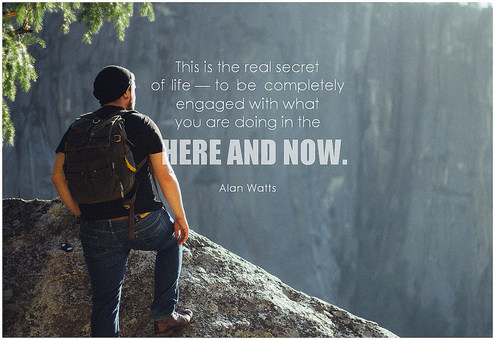
So, how do we release fear and racing thoughts?  How do we become grounded? How do we accept change gracefully and allow personal transformation into our lives?  We do so by being in the present moment.  The present moment is the most under-rated, least appreciated place, yet it is the most valuable.  The present moment is where awareness lives and our journey lies.  Living in the present moment helps us to develop the awareness that brings us peace and healing.   It allows us to accept “what is” by bringing focus to the experience.  It’s all we have.  When we live in the present, experiencing each moment, we become part of the life we are living.  We slow down. We participate fully.  We learn gratitude.  We become mindful.  We accept change.  This grounds us.   

The Buddhist monk, Thich Nhat Hanh, teaches being present through mindfulness.  He explores being in the present moment through this poem: Breathing in, I calm my body.  Breathing out, I smile.  Dwelling in the present moment  I know this is a wonderful moment. He reminds us that the simple act of focusing on the “in and out” of our breath brings our awareness to the present.  The simple act of smiling brings us into the present as well, bringing peace and equanimity to our body-mind.  He teaches us that contemplating the future or lamenting the past will not enhance this moment but rather make our lives a hodgepodge of anxious transitions. If we can’t find peace in the present moment, it will always be fleeting and unattainable.

So, in the spirit of being present, practice being in every moment whether it is washing dishes, driving to work, brushing your teeth, cooking dinner, or playing with your kids.  Breathe into the moment, focus on what you are doing, and gently bring your attention back if distracted.  Take time each day to sit and breathe mindfully.  This will set the foundation of calm that we need when change comes into our lives. Try this exercise for five minutes: Sit comfortably in a quiet place.  Turn off your phone.  Eliminate distractions.  Close your eyes.  Notice your breath entering and leaving your body.  Pay attention to the quality of your breath.  Is it smooth or choppy?  Deep or shallow?  Allow your breath to become calm, drawing it in slowly as you relax your face and shoulders, allowing your belly to expand naturally.  Exhale and relax your belly.  Focus on your breath and imagine your belly is a balloon, filling and emptying as you inhale and exhale.  Choose a point of focus.  Perhaps, the sound of your breath or the sensation and movement of your belly as the breath enters and leaves your body.  Re-direct your attention back to the breath if you become distracted by your thoughts or environment.  When ready, bring your attention back to your surroundings.  Open your eyes.   This is the practice of “being”.   As Deepak Chopra says, “You are a human being, not a human doing”.  That is something to be mindful of every day.  So, develop the practice and watch yourself transform.
​
(Published in Creations Magazine 2015)

1 Comment

August 02nd, 2015

8/2/2015

0 Comments


0 Comments

It's All About The Journey, Isn't it?

6/29/2015

1 Comment

 
Picture

What is life but a journey into the un-known.  We start out oblivious to this notion and then at some point we realize there must be a purpose to our lives.  The questions raise themselves from some undiscovered space, as the mystery of it all intensifies.  What is my destination?  What is my purpose?  What am I supposed to be doing in my lifetime?  How can I leave this world a better place for having been here?  At first, we may feel the need to figure out the destination, as we stress about what we are supposed to be doing.  Sometimes, this pondering can be down-right terrifying as the weeks turn into months and the months, into years.  Wide-eyed wonder can turn into existential angst in the flip of an hourglass.  Besides the inevitable death and taxes, what is there?

Imagine that each step on the journey is a piece of an enormous puzzle.  Every experience, positive, negative, or neutral, contributes to our understanding of it.  At some point, this becomes clear.  Eventually, the destination becomes the least important part, transferring the glory to every step along the way.  Each step is a complete experience, a developing pattern of imprints on our psyche.  The puzzle may require some imagination, patience, and perseverance to put together, but it is worth the work.  It is a fascinating accomplishment to grow into our bigger picture because our enormous finished puzzle is actually a piece in an even bigger puzzle.  We are enriched by so many others that the whole just keeps inter-connecting and evolving outward.

So, coming back to our piece of the puzzle, how do we figure it out?  A good place to start is to discover our Dharma.  Dharma?  Yes, rhymes with Karma.  While Karma is the sum of the effects of our actions, Dharma is our purpose.  Whereas Karma is “actions” or “deeds” which play into the entire cycle of cause and effect, Dharma is essentially that which raises us to our highest purpose.  The word "dharma" comes from the Sanskrit root dhri, meaning to "uphold" or to "sustain."   What we do in our lifetime to serve ourselves and others in the best possible way is our Dharma.  It upholds and sustains right action.  Self-realization is the highest Dharma.  In  21st century terms, Dharma is accessing one’s spiritual purpose as a way of identifying the career/life path that best expresses one’s creativity and service to others. 

In our quest, we can ask ourselves the following question: “ If I had no financial worries in the world and had unlimited time on my hands, what talents and abilities would I use to enrich myself and serve others?”  Other questions might be, “What unique abilities do I have?  What activities bring me into a state of “flow”, where I lose all sense of time?  What do I do that brings comfort and healing to others?”  Finding our Dharma, helps the journey to unfold effortlessly.  It brings clarity and focus to each step and alignment to the bigger picture.  And, the bigger picture?  Well, that is a topic for another  Inner-Soul contemplation… 


1 Comment

Let's Talk Yoga

7/19/2014

1 Comment

 
Picture
What is yoga?  
I have had students come to class and ask me if yoga is a religion.  I have had some approach yoga as an exercise program.  Others have expressed concern that yoga is for skinny people that can bend their bodies into pretzel shapes.  There are so many misconceptions about yoga, some very limiting and others very exaggerated, so let's clear up some of the misinformation.

Yoga is a lot of things with a deep history but in the interest of keeping it simple, yoga is a practice and philosophy.  Its essence is to unite body, mind, and spirit and initiate the practitioner into a state of unity consciousness.  Yoga is 5,000 years old and there are many systems of yoga.  Just as there are many roads to Rome, there are many paths to unity consciousness.  

The four main paths are Raja (Royal Yoga), Bhakti (Devotional), Jnana (Self-inquiry), and Karma (Skillful action).  The word yoga comes from the Sanskrit root "yuj-" which means "to yoke" or "join".  The essence of the practice of yoga is to unite individual consciousness to the bigger unity consciousness.  For some this would translate as the soul connecting back to the spirit or God.  

Everything is energy, even apparently solid objects, so with this realization comes the understanding that everything is one.  There is no separation. Yoga addresses all aspects of energy and connection.  It addresses the physical, mental, emotional, and spiritual and integrates it into one whole.  

How does this happen?  Isn't yoga a bunch of poses?  Well, yes and no.  The practice of yoga is much deeper than that.  Raja Yoga, which is known as the Royal Yoga because of its inclusive nature of all yogas,  is based on the Eight-limbs or Eight-fold path of Pantanjali, the father of yoga. He codified his knowledge of yoga in a body of work called the sutras, which are short concise guidelines on how to live your yoga.  To be authentic, yoga is a practice on and off the mat. 

The Eight-limbs of yoga are as follows:

1. Yamas (Ethical guidelines):  Ahimsa (nonviolence), 
                                Satya (truth),  Asetya (non-stealing), 
                                Brahmacharya (self- restraint),  Apragraha (non-
                                greed)
2. Niyamas (Moral Observations): Susha (purity), 
                                 Santosha (contentment), Tapas (austerity),  
                                 Svadhaya (study of the scriptures), Ishvara 
                                 Pranidhana (surrender to God)
3. Asana: Steady pose, posture 
4. Pranayama: Control of vital energy through breathwork 
5. Pratyahara: Withdrawal of the senses 
6. Dharana: Concentration of the mind 
7. Dhyana: Meditation 
8. Samadhi: Enlightenment, union with the Divine


There is a Zen saying "Don't confuse the finger pointing at the moon for the moon itself".  If we are busy focusing on one aspect of yoga, we miss that all the parts are the fingers pointing to unity consciousness.  When taking up the practice of yoga, every part is as important as the next.  The postures, breathing exercises, meditations, and development of witness consciousness, where we see ourselves as a witness to our own thoughts and actions, are yoga.   When we view yoga as a multi-faceted vehicle for direct experience of unity consciousness, and subtle energy as the ground of existence, we are on the path.  Yoga helps us find the balance that creates body-mind health and wellness.  So, that's yoga.

1 Comment

What's your number?

3/31/2014

1 Comment

 
Picture


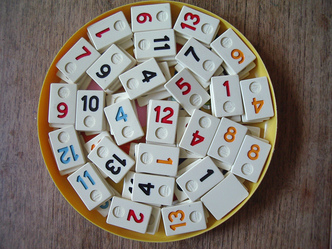
Do you have a favorite number?  Have you noticed that the same numbers come up repeatedly in the course of your day, week, or year?  What do numbers mean and why do they appear?

Sometimes, the number you see is connected to something or someone.  For example, the birth date of a departed relative may appear randomly on a digital clock, license plate, or address.  This gives the reassurance that their energy is around you.  A common number combination is 11/11 which is a master energy number representing angelic presence or guidance.

You may have a lucky number with which you feel a particular resonance.  You may feel that it brings you luck or some kind of positive energy.  Numbers carry energy, each one having its own meaning.  So, when you see certain numbers, you can discern a meaning or message that you were meant to receive.  For example, if you started seeing “5”s everywhere, then maybe change is around the corner.  If your dad passed and his birthday is in May, the “5”s could be a message that he is around you. 

A friend of mine went for a cup of coffee one day and while walking back to the car saw a $2 bill land at his feet.  Within a few seconds, another and another landed at his feet.  He called me and asked what the possible meaning of this could be.  What I saw was “2” for relationship, plus “2” equaling “4” for father energy, and “2” more totaling “6” for family responsibility and love.  I explained it was a message from his father.  He said that he sensed it was his father but wanted a second opinion.  Numbers work in mysterious ways. 

Below, is a brief snapshot of the meaning of each number up to “9”.  Numbers flow in cycles of nine:

1= New beginnings, opportunities, creative
     spark, leadership

2= Partnership, relationship, cooperation, 
      attention to detail, giving/receiving, 
      mother energy

3= Friendships, self-expression, luck,
      communication, 
     

4= Stability, structure, home, tradition,
      service, “salt of the earth”, father energy

5= Change, freedom, travel, public 
      dealings, curiosity

6= Family, love, marriage, pregnancy,
       divorce, responsibility, creating beauty

7= Spirit, trust, open heart, expertise,
      teaching, secrets, wisdom

8=Authority, power, balance in all pursuits
     money  in/out,  real estate,
     expansion/growth, karma

9=Compassion, tolerance, forgiveness, 
     humanitarian pursuits, spiritual
     growth, legal matters, endings


If you want to take these meanings a step further, add up the numbers you see and find the deeper meanings.  For example, when my friend saw the 2+2+2, we looked at the “2”, “4”, and “6” meanings.  Follow your intuition.  Remember that numbers are not only symbols that carry an energetic meaning but also intuitive triggers that tap into our soul knowledge.  Open your heart and interpret what you see by letting your mind and heart work together, using the left and right sides of your brain.  Trust your gut and let the images and information flow.  Relax and enjoy the experience!


1 Comment

Mercury Retrograde February 6-28

2/15/2014

0 Comments

 
Picture
Get Ready!

In 2014, Mercury will be retrograde from
  • February 6–28
  • June 7–July 2
  • October 4–25

We have just entered a period of time where Mercury is retrograde.  What does that mean?  It's an illusion that the planets, currently Mercury, appear to be traveling backward through the zodiac.  With Mercury in retrograde, we experience  a period of high intuition.  We become more sensitive to signs and sychronistic happenings.  It is a time to reflect on our experiences and history, being open to understanding and seeing the past in a new light.

This is a time of flexibility and patience.  It is definitely not a great time to make final decisions or sign contracts of any kind.  Partnerships should move slowly as well.  Plans and travel may be delayed.  Break-downs of all kinds occur during mercury retrograde, like electrical devices and even communication.  So, back up your files, put those serious conversations on hold, or at very least be patient and open minded when things don't quite go as planned. 

Use this time to slow down, reflect, plan, and tie up loose ends.  Frustration can be managed by being prepared and understanding that this too shall pass...by the end of the month! 


0 Comments
<<Previous
Forward>>

    Any thoughts? 

    Share.

    Archives

    July 2025
    February 2025
    October 2024
    June 2024
    November 2023
    October 2023
    September 2023
    February 2023
    December 2022
    October 2022
    April 2022
    July 2021
    January 2021
    October 2017
    August 2016
    August 2015
    June 2015
    July 2014
    March 2014
    February 2014
    May 2013

    Categories

    All
    Astrology
    Hypnosis
    Numbers
    Numerology
    Past Life Regression
    Reincarnation

    RSS Feed

Powered by Create your own unique website with customizable templates.
Photos from hmsstfu, shixart1985 (CC BY 2.0), FontFont, ella novak, symphony of love, Muffet, *•.¸♡ Sυҽ90ƈα ♡¸.•*, shixart1985, Javcon117*